
Seed-sowing supplies
and Extreme Dwarfanator methods.*

Right now is the beginning of the real seed-sowing-under-lights season for me. I start a lot of plants inside under my shop lights, as it is a better system for me than trying to have a greenhouse and keep it heated and cooled. The house is already barely heated in winter and sort of cooled in summer, so it makes more sense for me to have a system of inexpensive shop lights up on bricks in the living room, under which the seedlings for that year are getting their start.
Over the years I have tried different systems for starting seeds in “flats,” as they used to be called. I did have actual wooden flats at one time. I built them from scraps of wood. But when they were full of soil, they were very heavy. Also, not all plants love to have their roots disturbed when you dig them out of the flats for transplanting. So I no longer use wooden flats.
Most people are familiar with plastic plug trays, because they are the kind of container that small plants—flowers or vegetables—are sold in, in spring. And for a good reason: the plastic six- or four-packs are not heavy, and the roots are not terribly disturbed when you remove the plants from the little container to transplant it into the garden. Ok, there is some plastic involved, but if you re-use these containers for years, they are not terrible. I use them because growing seedlings in these plugs makes it easy to give away extra seedlings.
A less plasticky alternative is the soil block method. I used this for a while, and it does work: you buy a soil block maker, make up a wet mixture of peat, compost and garden soil, and dip the soil block maker into this wet mix. You then depress the handle on the soil block maker, and out pop five identical little cubes of soil with a slight depression in their tops for the seeds. These cubes have to sit on a tray of some sort. The idea is that the air around the cube naturally prunes the roots, so that when you put the soil block in the ground, the roots take off fast. Eliot Coleman is a big proponent of soil blocks.
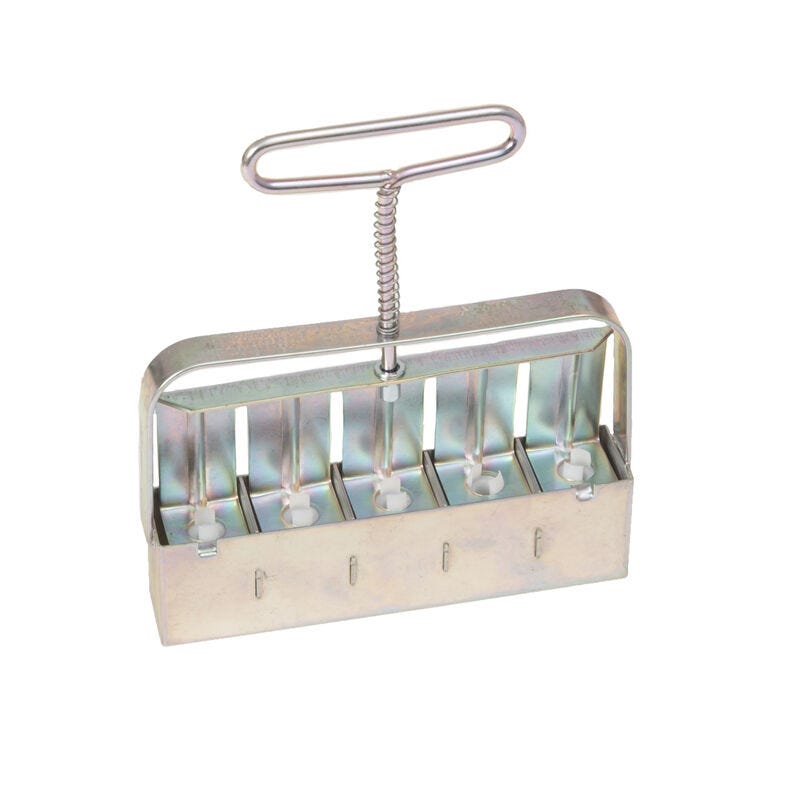
There were several drawbacks to soil blocks for me. I didn’t like their fragility. Although they are stronger than they look once they dry a little, they can still crumble if you try to move them from their tray, say, to a different tray. Sometimes I have to move plants around in order to make the most of the space under the lights; I move plants to the deck, and then back inside if it gets too cold. This was hard on individual soil blocks and on me. If you left the trays undisturbed in a green house, it might be ok.
Also you have to water them carefully. Johnny’s recommends bottom-watering them in trays without holes. They dry out kind of fast, as you can imagine since five sides of the cube are exposed to air.
I used to make my own soil block mix according to Eliot Coleman’s recipe here. But Johnny’s also sells a soil mix that they say works will with soil blocks.
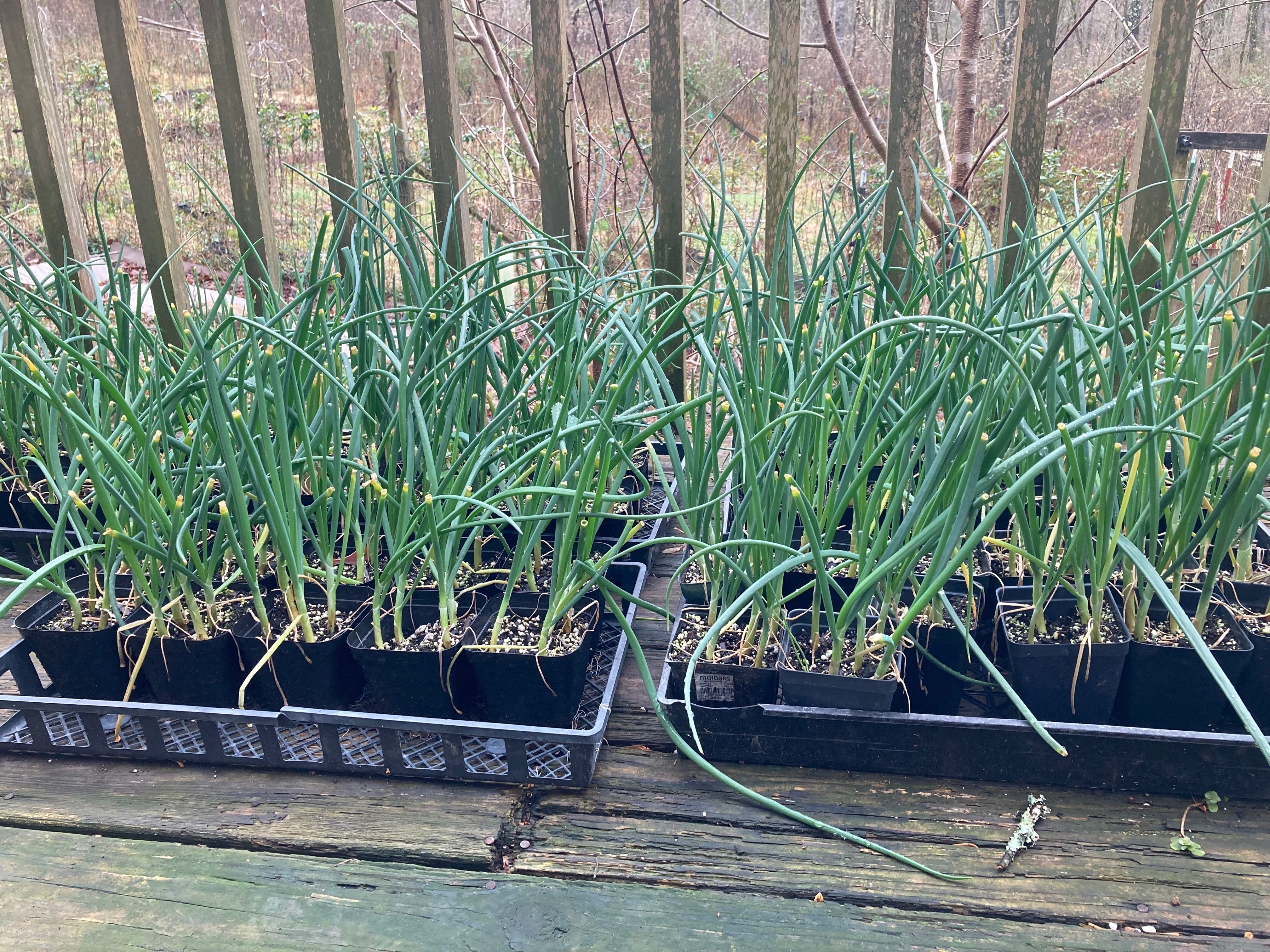
Nowadays I mostly use the plastic plug flats in a standard 1020 nursery tray. The plastic plug flats come in a lot of sizes and configurations, sold by how many plugs fit in one 1020 tray. The smallest size cells I ever use are the ones in a 72 cell plug flat. For example, I use them to start flowers and green onions as multi-plant plugs. That is, I don’t just plant one onion seed per cell: I put five to eight seeds in each cell and transplant them as a group, about eight to ten inches apart in the row. (I got this idea from Eliot Coleman, who does this with soil blocks. It works with beets and spinach too.)
The other size I use a lot is the 36 cell jumbo plug flats. Each 1020 tray holds six of those six packs of the kind you buy at a nursery. I love these for cabbages and other brassicas, and later, for tomatoes and peppers.
Sometimes I pot up the tomatoes and peppers to a three-inch plastic pot, one plant per pot, before transplanting into the garden. The 1020 trays hold eighteen of these three inch pots. The three inch pots are quite affordable, and so it’s ok to give away a lot of tomato plants in them.
An important accessory to the 1020 flats are the clear plastic domes that fit over them. The reason I put these over the planted plugs in the 1020 trays is that they seem to hasten germination by keeping the flats moist, and also, more importantly: they deter mice. In early spring mice start moving into my house looking for things to eat, and they like all kinds of seeds, including even onion seeds. They dig up the newly planted flats looking for the seeds and the seeds thus never come up! So you have to protect them while they’re germinating. Once they’re up, the mice lose interest. (I confess that I also trap the mice using reusable plastic traps, not those horrible wooden ones that always trap me.)
If you put a plastic dome on a 1020 flat, you have to make sure that it doesn’t get too hot under there: keep the lights at least six inches above the dome. And once the seedlings germinate, remove the dome, or the seedlings may become too soggy and they may get damping-off disease, which kills them. Once you remove the dome, you can lower the lights to right above the seedlings.
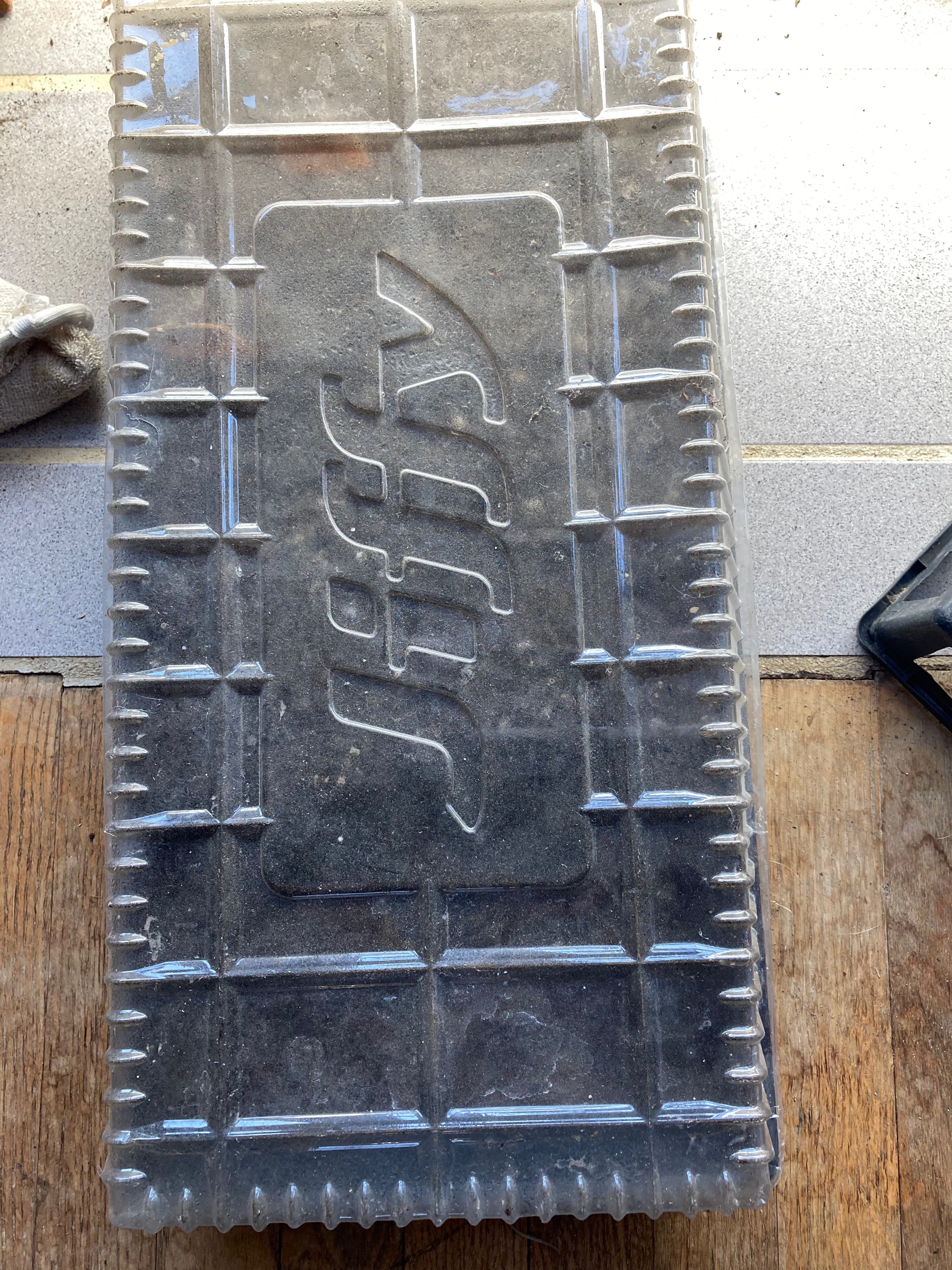
I also like to sow some kinds of seeds in these very durable plastic flats made in England: the Garland small seed tray. These are plastic but will last a lifetime, because they are so sturdy, unlike the 1020 trays that fall apart after a few years. I like them for certain things: starting leeks and onions especially. Leeks and onions just seem to germinate better in these trays than in the plugs (or modules, as Monty Don calls the ones with individual little plugs). I usually pot the seedlings up to larger “modules” as they grow. This is the closest thing to a traditional “flat” that I use. They fit under the lights nicely too. I have noticed that Monty Don, on the BBC show Gardeners’ World, uses them for almost everything. But some plants do better if their roots are not disturbed much, like cucurbita, so he starts those in three inch pots.
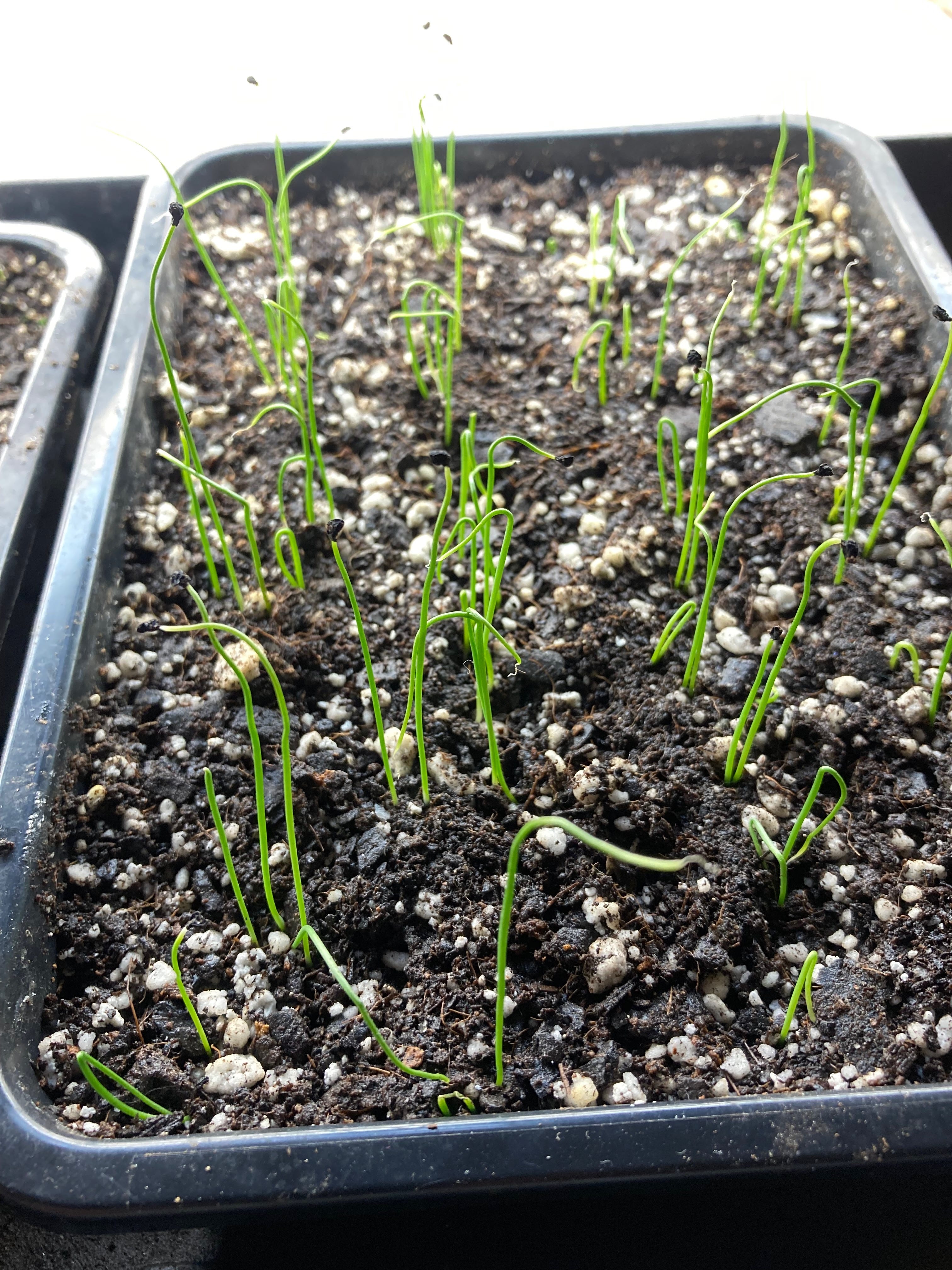
Leeks in the small Garland flat.
What about the potting mix itself? I used to buy a peat-based mix, the cheapest one available at the garden center. But Monty Don and the other people on BBC’s Gardeners’ World have convinced me that peat-based potting mixes are not sustainable: peat is not a renewable resource. Most of our peat comes from Canada. It was formed about twelve thousand years ago when the glaciers retreated, as a result of mosses and other plants falling into stagnant water and not decomposing, because of anaerobic conditions. New peat forms very slowly, at the rate of one millimeter per year! So it makes sense to use…coconut coir instead, which is constantly being made by coconut trees, in the shells of coconuts.
You can buy coconut coir in bricks that must be rehydrated before using them in potting mix, but to me it’s easier just to buy Coco Loco, a potting mix that they sell at my local garden center. This has been working great for me for years.

Some growers make their own potting mix from compost and coarse sand. (Eight parts compost to one part sand.) I have done this in a pinch, but the results were not great. Weeds come up with the seedlings, and the seedlings never grow as fast or as well as they do in commercial potting mix, probably because my homemade mix is always going to be heavier. If you added perlite, that might help, but you have to buy perlite, so why not just by potting mix, is my feeling. As far as I know, nobody makes perlite at home from volcanic glass, except maybe Martha Stewart.
You can kill the weed seeds in compost by sterilizing it in the oven for a while, and I’ve done that in the past, but ain’t nobody got time for that.
Now, about the lights: I use four foot long shop lights, of the sort that you can buy at a hardware store. Nowadays, the lights and the fixture are all in one piece, and the lights are LED lights rather than fluorescent bulbs. The LED lights seem brighter than the old fluorescent bulbs too. I prop these light fixtures up on bricks, in the living room. Not everybody wants their seedlings in the living room, but I’m fine with it. If you buy three of these shop lights, you can fit four 1020 trays under them, plus the bricks, so that’s a lot of plants in a small place.
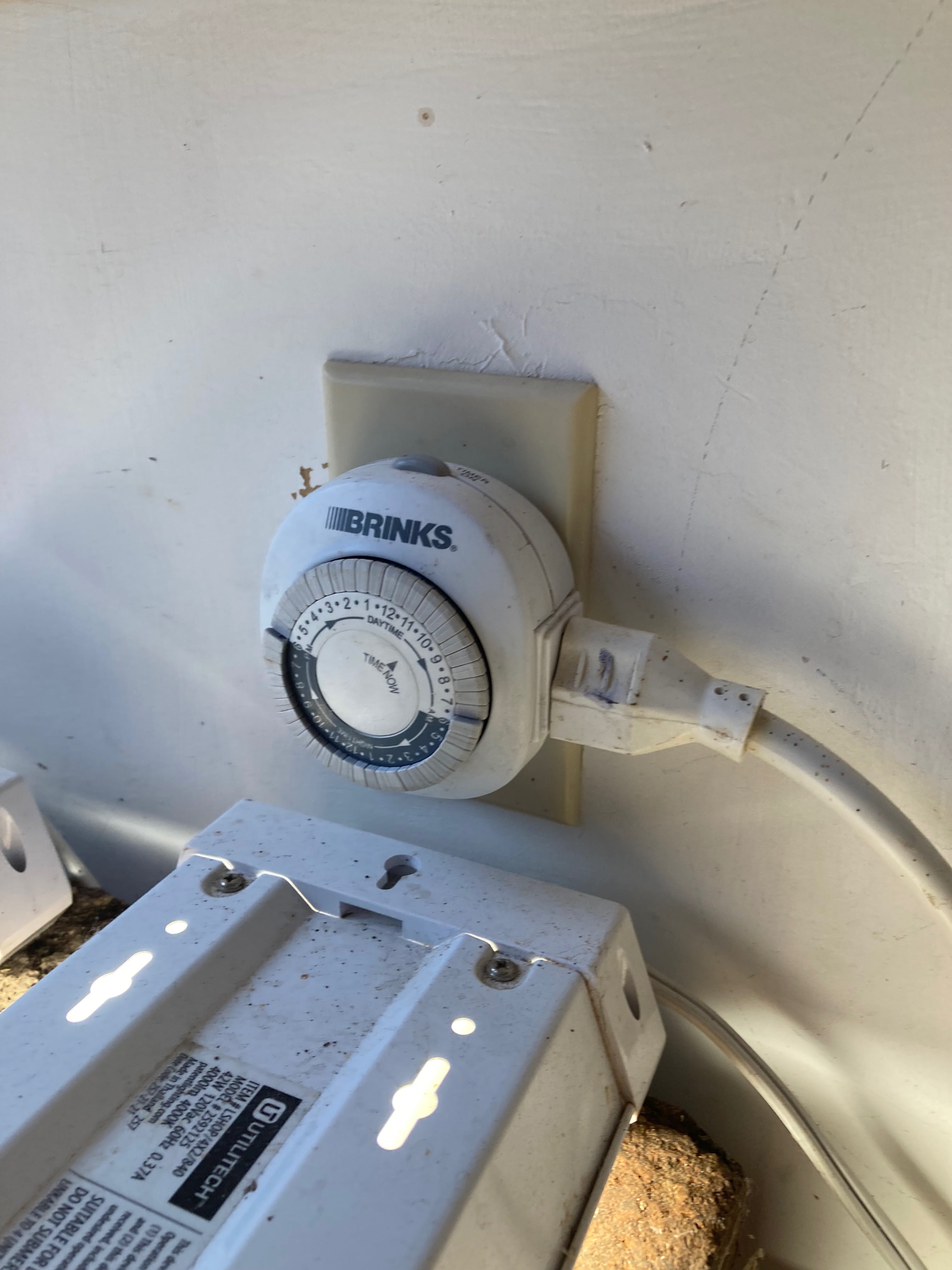
I use a timer to turn the lights off at night and on in the morning. The timer has a power strip plugged into it, and the six lights plug into the power strip, so they all go off at once and come on at once.
Of course, you can get a much cooler set-up that takes up less space: Johnny’s sells a kind of kit for making an LED propagation rack that takes up even less space and holds sixteen flats! (You buy the metal shelving from a hardware store or restaurant supply store.) Maybe some day I’ll put that in my living room instead.
Really, though, six shop lights on the floor seem to be working ok for me. I do move plants out to the deck as they get big, in part because I need the space under the lights for other seedlings, and in part because they need to “harden off,” that is, get used to living outside, before they are transplanted. If it is going to get below freezing, I spend some time in the evening moving them to a glassed-in porch, and then I have to move them back out again in the morning. But usually this doesn’t have to happen that often. My grandmother moved tomato seedlings around her house every few hours in a baby carriage, from window to window as the sun moved, until she got her 2x4 plastic green house.
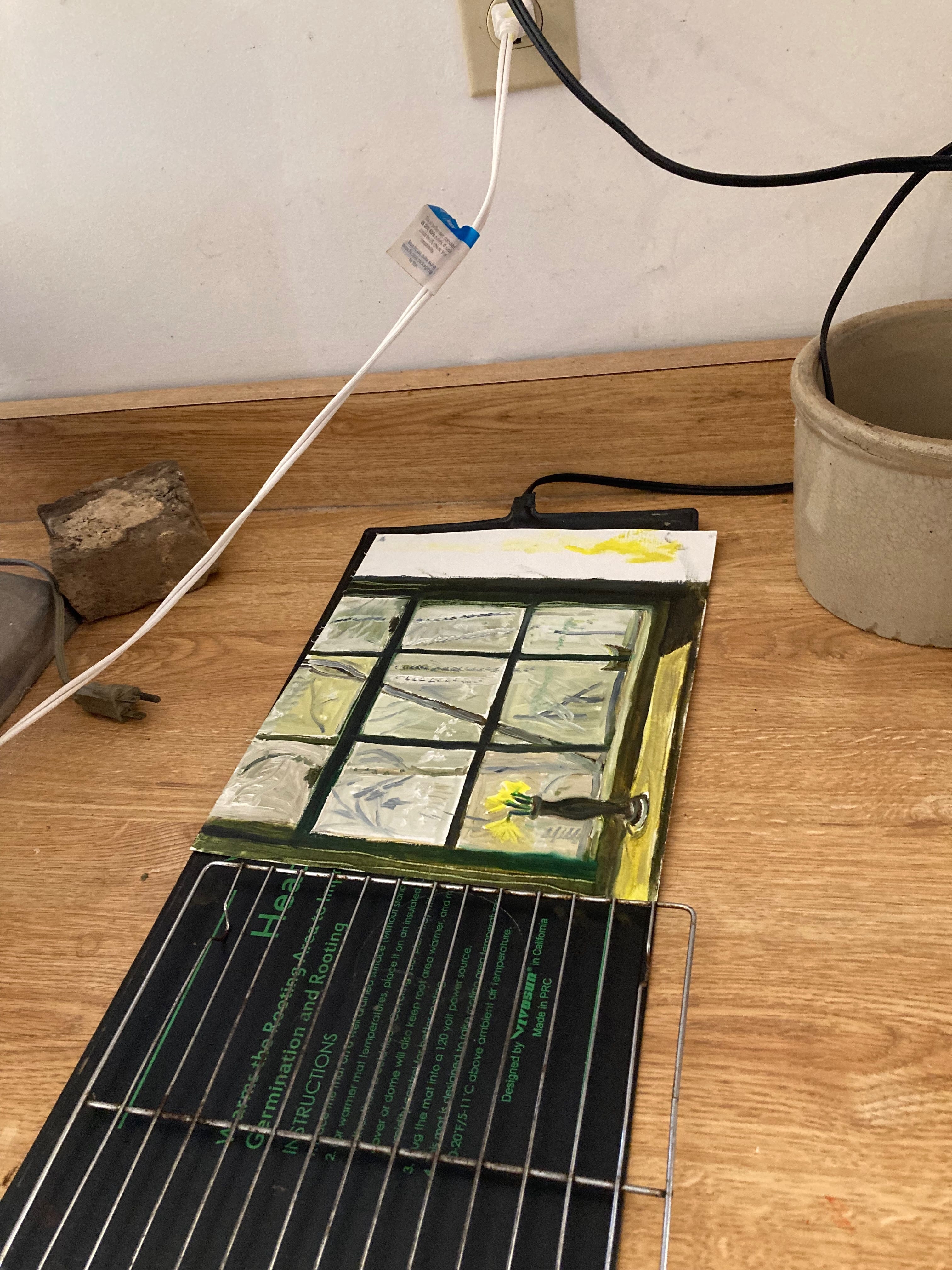
There is one more accessory that I find useful: an electric heating mat to go under the 1020 trays sometimes. Certain seeds need heat to germinate, like tomatoes and peppers. I put these mats on the floor under the trays and plug them in, and this creates the right temperature for germination. (Don’t put the seedling mats on the same timer with the lights, as they need to stay on at night.)
When they’re not underneath the seedling flats, I use them to dry seeds and herbs on paper plates, make yogurt, and dry oil paintings. They’re just an all-round kitchen work horse. (Oil paintings can take a ridiculously long time to dry. I’m working on some work-arounds for that.)
It’s a lot of gadgets, I know. But it still seems less complicated than a greenhouse to me. There are certain greenhouses I would not say no to, if somebody wanted to build one for me. This one is nice:

Kew Gardens, The Palm House, London, England
I was wondering why Prince Andrew didn’t just hang around here. Maybe he could have gotten a volunteer job weeding or something. He would have stayed out of trouble probably. Or not. But it seems as if Kew Gardens should be enough for your average English prince and he shouldn’t need to go looking for love in all the wrong places. Maybe he never saw Urban Cowboy and didn’t know that song.
* In my county there will be an attraction tomorrow called Extreme Dwarfanator Wrestling. Tickets are expensive, but there’s nothing to stop me from calling everything I do from now on Extreme Dwarfanator Something.
heating mat