
Peas
You've eaten them all your life

I like my peas with honey
I’ve eaten them all my life
It makes the peas taste funny
But it keeps them on the knife.
This was one of my grandfather’s favorite jokes in the 1960s. I did try it: sticking peas to a knife with honey. It works.
He told this little rhyme every time peas were on the table. In those days they were usually cooked frozen peas, but sometimes they were horrible canned peas that were called Le Sueur peas. For some reason, these were considered “special,” and we had to have them at Thanksgiving and Christmas. Even before I became a foodie, I knew they were awful. But traditional! Christmas wasn’t Christmas without canned Le Sueur peas! (PS: they are not from France; they’re from Minnesota.)
These days, though, I don’t grow those kind of peas very much: the one where you shell out the little round balls and eat that part only. Since I only grow about a 25’ row at most, it seems to make the most sense to grow edible-pod peas such as ‘Sugar Snap’ types or snow peas. A twenty-five foot row of shelling peas would only make a few servings and thus would be a disappointment, whereas if you can eat the pod too, you get more food per linear foot of row. (This is not to say that the shelling peas are not delicious, and if you have the space, go for it!)
I remember when ‘Sugar Snap’ peas first arrived in the seed catalogs, in 1979. My grandmother was past her prime gardening years, but she was excited anyway. I grew them too in my first gardens in the 1980s, but then I found out that snow peas were more reliable and productive, so now I mostly grow those.
My favorite is ‘Oregon Giant.’ It can get pretty darn big, sometimes as long as five inches.
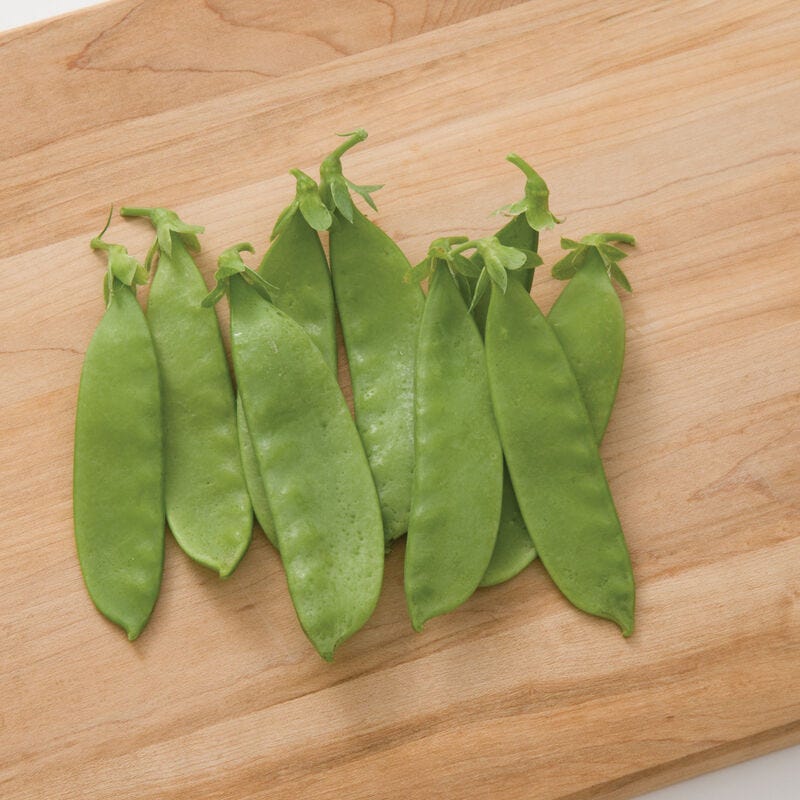
(Photo from Johnny’s Seeds)
Today I planted about fifteen feet of these peas. I used to sow them in thickly in a wide row, but now I sow them in a single row down the middle of a four-foot wide bed, seeds about 1-2” apart, following the directions in the Johnny’s Seeds catalog. It’s better if the plants have some room as they need some air circulation. (I sow clover in that bed too, in the empty areas on either side of the pea row, so that after the pea harvest, the clover can “take over” and become a green manure. I may also re-use the trellis for some pole beans later in the summer, but the clover will not compete too much with the pole beans so it’s ok.)
One big problem here has been that the voles gobble up the seeds before they can even germinate! So I used to sow them in plugs and then transplant them to the garden when they were a few inches high. The voles were not interested in them once they were small seedlings, it seems.
But then I discovered Cole’s Flaming Squirrel Seed Sauce TM. This is an oil that is very flaming: that is, it contains habanero chili oil. It is sold as something you add to bird seed. I don’t know if it’s true that birds love this flavor, but rodents appear to hate it! I simply empty a package of seeds into a disposable plastic container, and then I put a teaspoon or so of this oil on the seeds before I plant them. They germinate without being molested by voles underground. (I might start a few pea seeds in trays just in case though.) It works on other seeds too, like corn, beans, and squash.
You have to be careful with this Flaming Squirrel Sauce: wear disposable nitrile gloves when handling seeds treated with it. I have found out the hard way that you should create the furrow first, and THEN put on your gloves and sow the treated seeds. If you keep picking up your tool again with your Flaming Hot gloves, your tools get Flaming Hot and then later that gets on your hands….you see where this is going. Before you realize what has happened, you are wiping your eye with a Flaming Hot hand, or if you’re a guy, it could be even worse.
I also put up a five foot tall trellis made of nylon netting. The first step in erecting this trellis is to pound some T posts into the ground, above five feet apart, down the middle of the bed. (I use a post driver for this.) Then I attach some bamboo to the tops of these posts, horizontally, with some wire. Once the horizontal top “beam” is in place, I use string to tie the top of the trellis netting to the bamboo. Then at the bottom of the trellis, there can be more bamboo or a wire. This bottom stick or wire has to hold the netting taut so that there is no slack at all in it. Otherwise birds can get tangled up in it. Here are some instructions from Johnny’s. Apparently some people use wire across the top too, but I have bamboo so I use that. If the steel post is too short, I sometimes tie a bamboo piece to it vertically to make it longer. (It’s also easier to attach the horizontal bamboo piece to a vertical piece of bamboo than to attach it to the T post, which is not really built for a top beam attachment!)
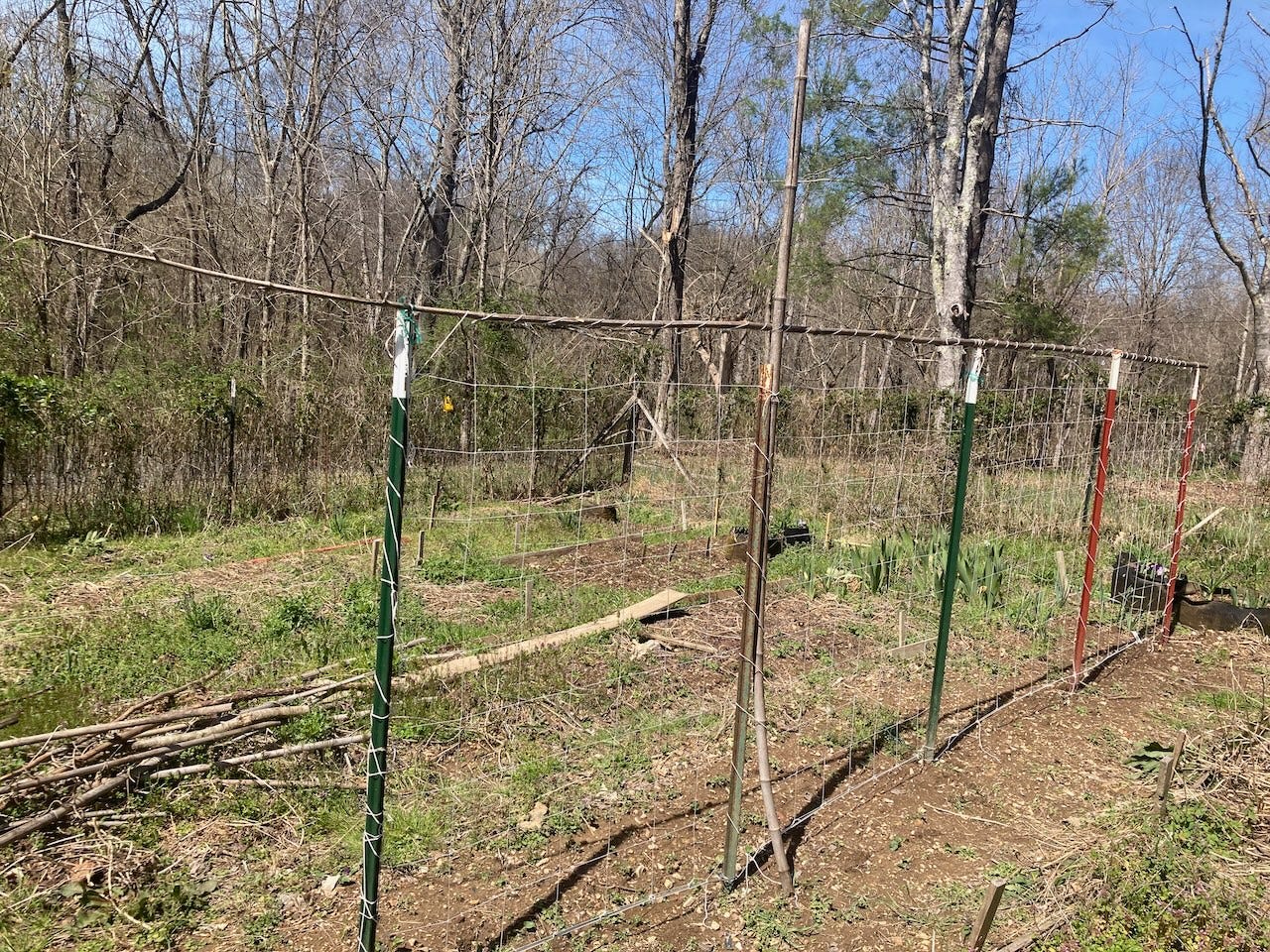
This kind of trellis is very useful for all sorts of crops. It’s great for pole beans, Southern peas, cucumbers, and even winter squash. Usually in the fall you can pull the vines away and save the netting to use again, except in the case of pole beans and Southern peas, which twine around the netting: the vines are somewhat hard to pull away from the netting. But regular peas are easy to pull off it. It took me about an hour and a half to make this trellis.
I have tried other kinds of peas besides the ‘Oregon Giant’ kind. Last spring I tried to grow some shorter peas that don’t need a tall trellis, like ‘Sugar Ann’ and some afila types that supposedly support themselves. The results were not good. But this could have been partly because in mid-May we had a torrential rain event with 6.5” of rain in one day. Rainfall was way above normal for the entire month, and the peas hated it. They started to rot from the ground up. After that, I decided to always grow mostly ‘Oregon Giant’ because of its resistance to pea root rot and other pea diseases.
Peas also don’t like hot weather, so it’s important to plant them by mid-April, for a June harvest before it gets extremely hot. Then suddenly there will be a LOT of snow peas. Sometimes I freeze some of them to add to soup in the winter: they look pretty floating in a clear chicken broth. But to be honest, they are best fresh. It’s possible to grow a fall crop too, but I usually don’t get around to it, because by then there are Southern peas and beans to eat.
‘Oregon Giant’ pods are very good raw. They are very crispy and almost as sweet as ‘Sugar Snap.’
Try them with honey, for overkill. No knife needed, though.
My parents always recited that poem too!