
Gourds
grow your own toys and storage bins

My first garden obsession was gourds. In the 1960s, there was a guy who wrote for the Tennesseean newspaper called Elmer Hinton. He wrote a column about rural life called “Down to Earth.” I lived in the growing city of Nashville, but already I had a kind of fascination with more rural places. Every year Elmer Hinton would tell his readers that if we sent him a dollar, he would send us some gourd seeds, so I did that. I grew them in the backyard by a tall privet hedge. Actually it was not a great place for a “garden,” as it was situated on the shady north side of the hedge, but nevertheless the gourds grew like gangbusters, possibly because we also had a rabbit in a cage, and I fertilized the little bed with his droppings. The gourds grew up into the hedge and over it, but enough of the gourds stayed on our side of the hedge that I was able to harvest a lot of them. They were big ‘uns: bird house and serpent gourds, as I recall, and maybe some dipper gourds.
It got even weirder when I replanted the seeds I had saved from that first crop: the birdhouse gourds crossed with the serpent gourds, created some monstrous hybrids in unusable but interesting shapes. We painted them with tempera paints, which didn’t look that good, but there was little in the way of gourd craft education at our school, or anywhere else, in those days.
Since then I’ve grown gourds every now and then. Once I grew a huge crop of bushel gourds, over a trellis that covered the back porch. This was not a good idea, because bushel gourds get so big that if one fell on somebody’s head, it could be very bad. I think they should be grown on the ground like watermelons.
More recently I grew a more modest-size gourd, ‘Tobacco Box.’ This is about the right size for your “tobacco” stash, or whatever else you might need to store away from sight. I grew it on a trellis as well, but it did not present a danger to anybody as the fruit only gets to be about eight inches in diameter and thus not very heavy.
I brought the tobacco box gourds inside to dry over the winter on a porch. One thing good about gourds is that they don’t really have to be protected from frost, in the way that pumpkins and squash do. If you forget about them, and even leave them in the garden over the winter, they will be ok as long as they are not sitting directly on the ground, and even then, they might be fine.
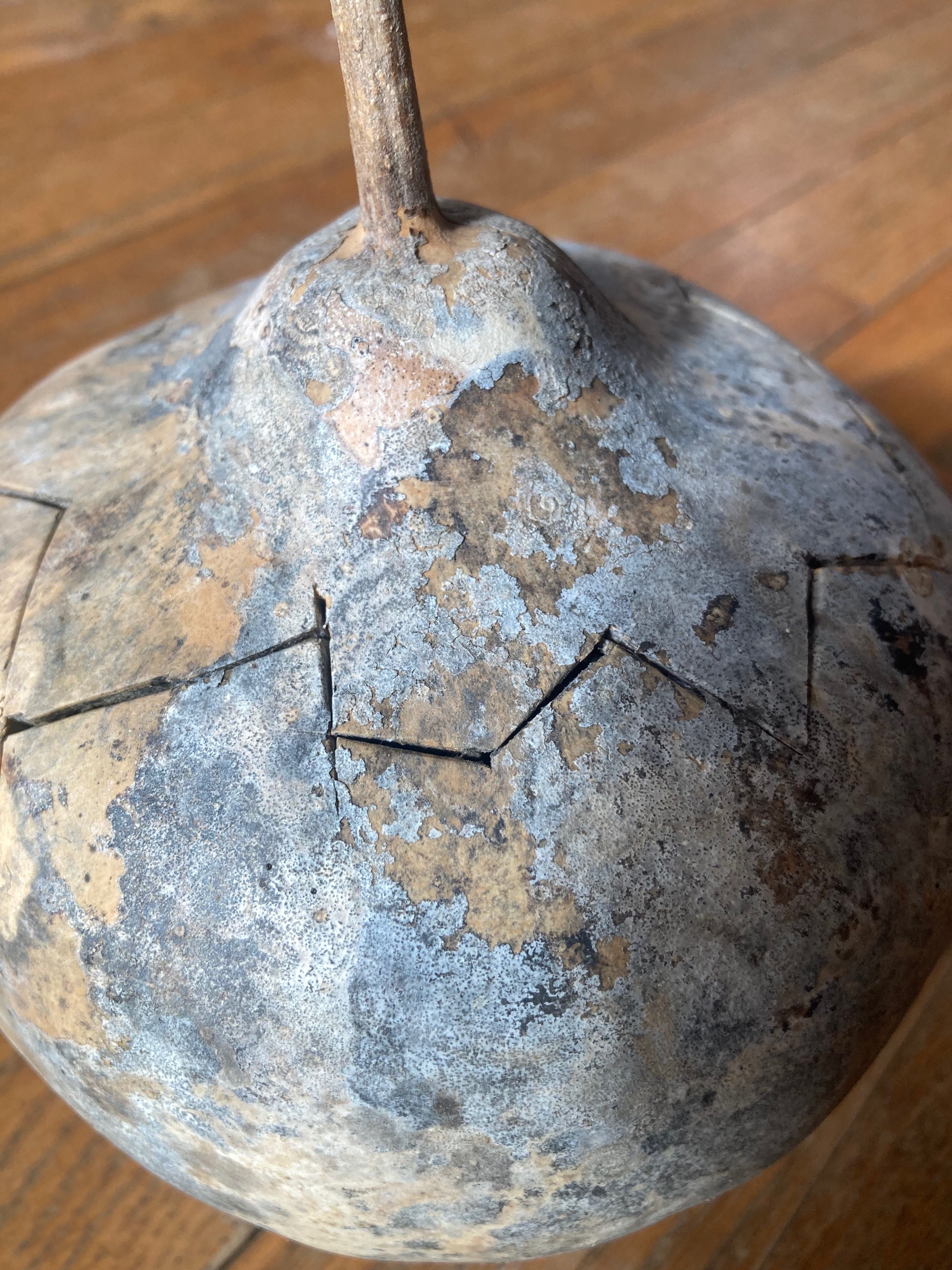
By the time I got around to thinking about doing something with these gourds, they had developed a patina resulting from the various molds that grow on the skin. The mold blooms and then dies, leaving these interesting mottled patterns on the gourds. I used an ordinary kitchen paring knife to cut around the top in a zigzag pattern. Then I took out the seeds and some strings inside, so I could put other stuff in there. I didn’t sand or clean up this gourd in any way, but it works fine as a container.
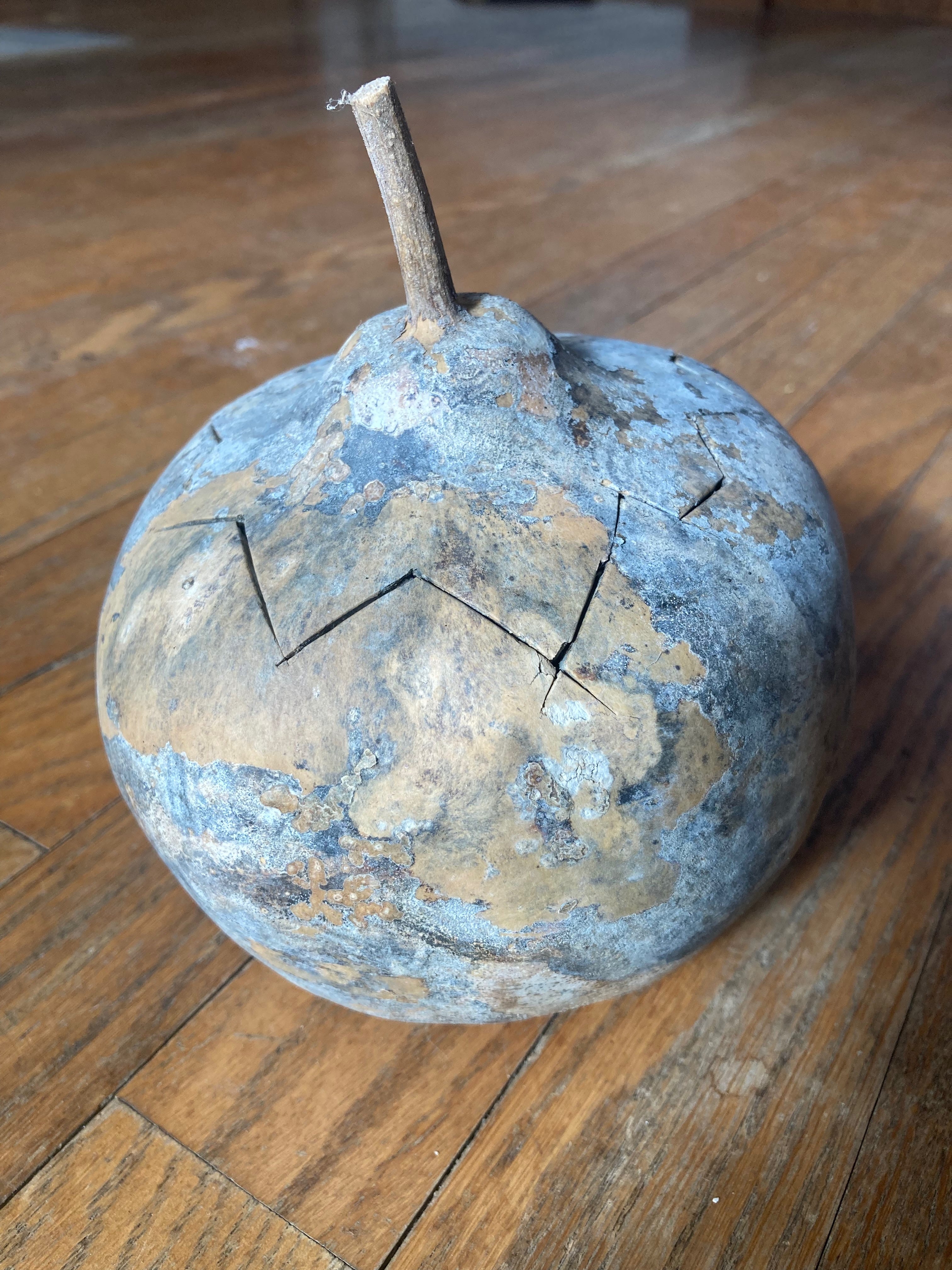
Apparently you can keep mold from forming on the new gourd with a 10% bleach solution or a 1:1 vinegar solution, before storing them to dry. I may try this in the future, as it leaves a more blank canvas for decorating later.
I did manage to get some of the mold off another tobacco box gourd with a metal scrubbing tool. Sandpaper helps too. Then I put a mineral oil finish on it. This one looks a little “better,” but honestly I don’t mind the patterns created by the mold.
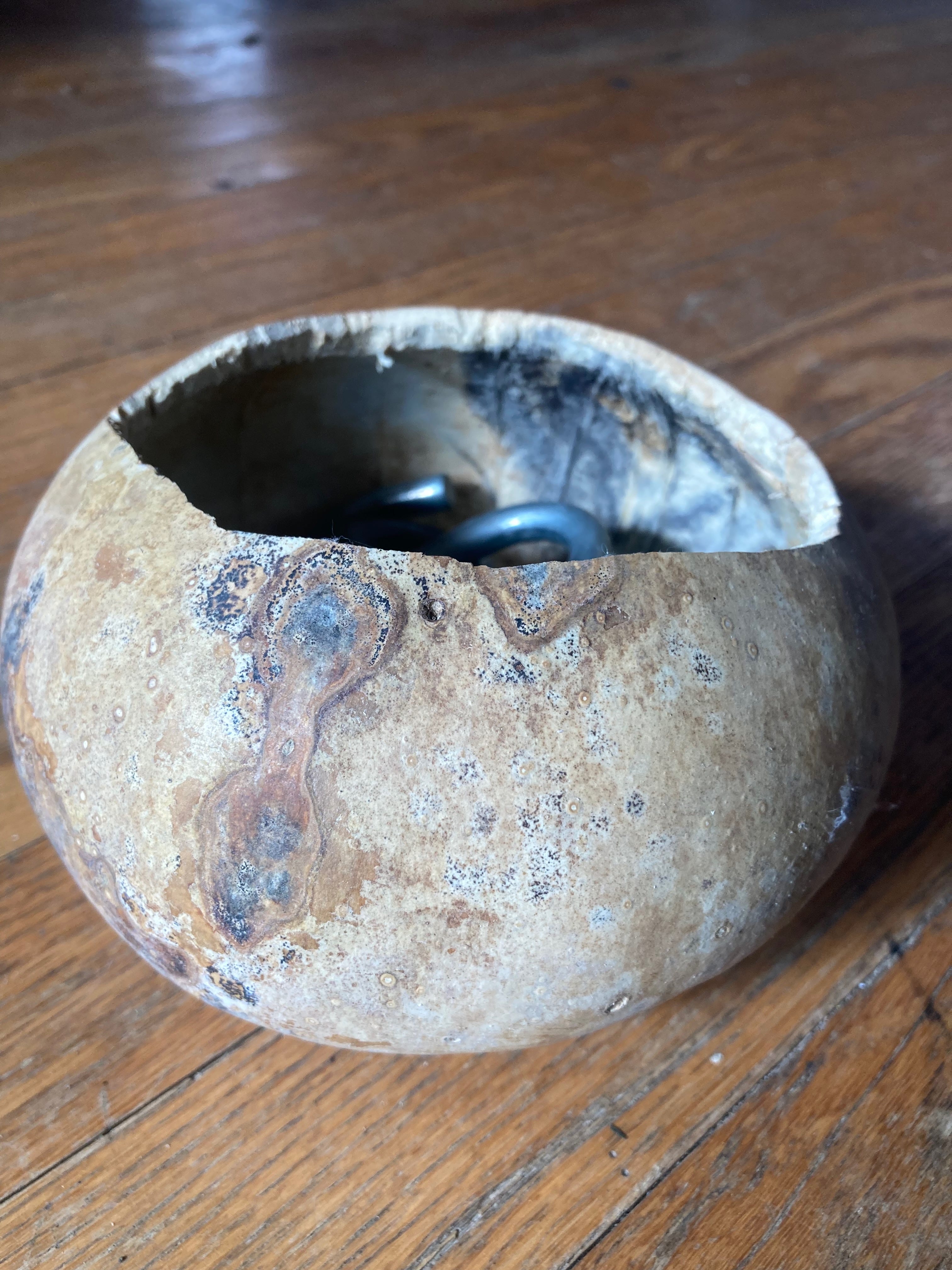
When I’m cutting the lid off, I make one slightly different cut so that I can place the lid on correctly and match the top and bottom without a lot of fiddling. I learned this trick from looking at Peruvian decorated gourds.
Gourd craft can be quite elaborate. I did buy a decorated gourd once from a better craftsperson at the farmer’s market in Cookeville. Then I filled it with the other gourds I grow: Tennessee Dancing Gourds.
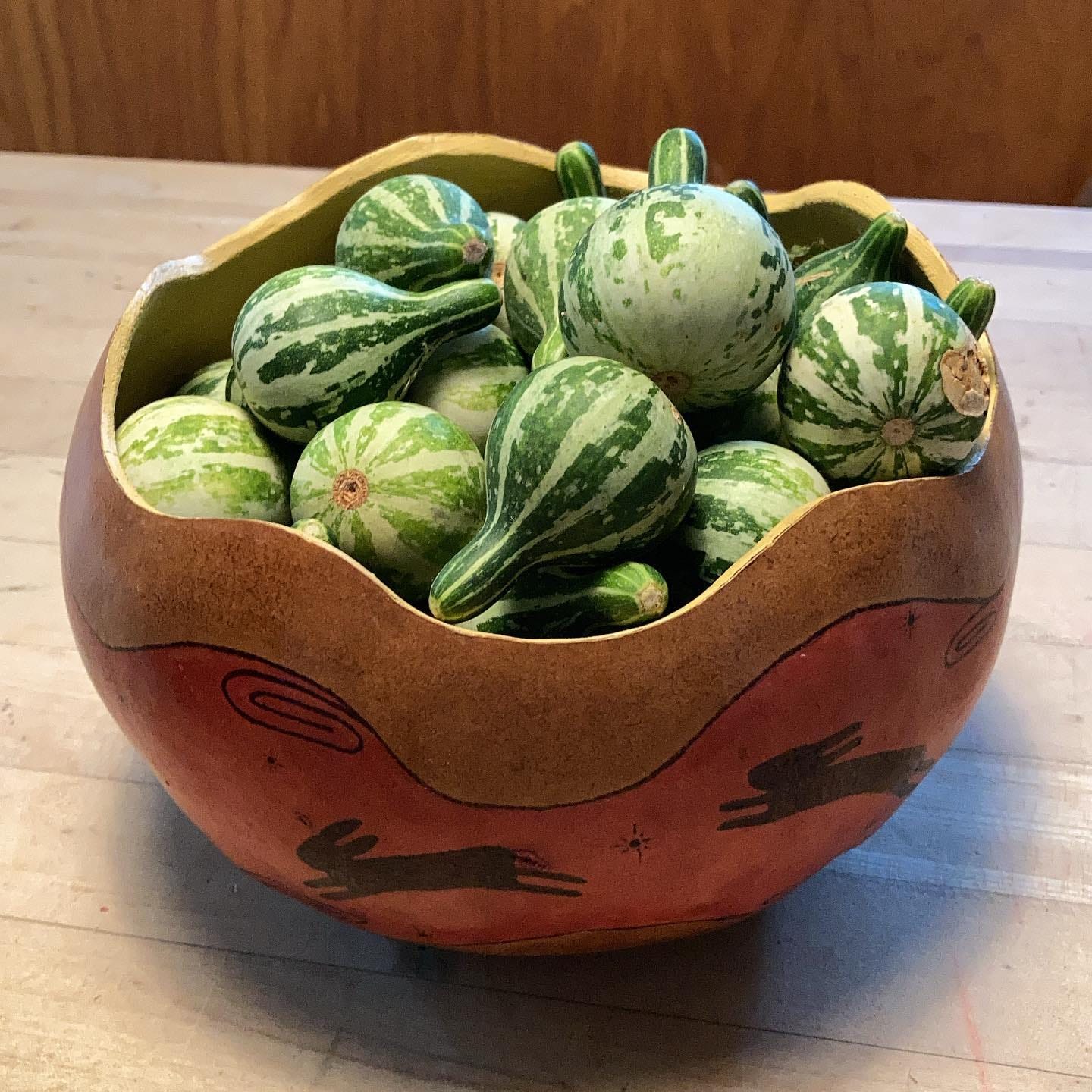
.These little gourds are quite easy to grow. I got my seeds from Fedco a few years ago, and got a lot of gourds even though, again, I did not grow them in an ideal spot. They grew up and over a huge boxwood. As a result, some of the fruits fell down inside the boxwood where I couldn’t see them and sprouted again the following spring, producing yet another crop. Then it happened again! So in 2026, I am going to grow them in a place where they get plenty of sun and air, and watch them go.
The great thing about these gourds is that they are toys, a traditional toy from Tennessee. According to Fedco, Junior Gordon of Williamson County is their source for these seeds, but they are an old 19th century toy. My granddaughter and I play with them as if they were little tops. We like to make them collide with each other while spinning on a wooden floor. Some people can make them spin upside down, on their little handle, but the handle has to be very straight for that to happen. The green ones are more fun to play with than the dried ones I think, because they are heavier and spin better.
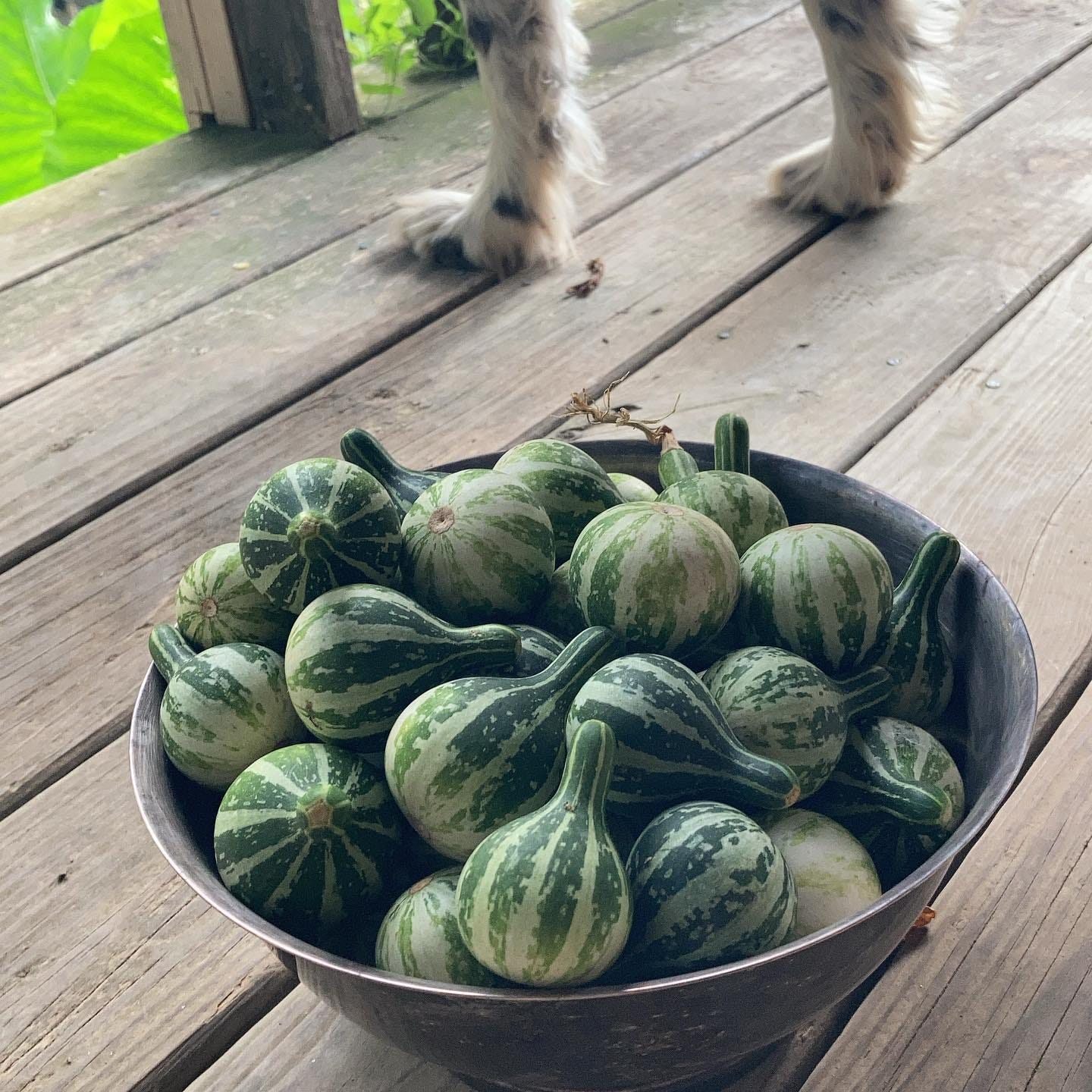
But there is nothing to stop you from making things with the little dried ones too. For example, you could make bowls for dolls and fairies.
Some day I would like to take a gourd crafting class at Gourdlandia. My favorite things that they make are the gourd night lights.
Welburne Gourd Farm is another source of information about gourds. You can buy gourds for crafting from them, as well as cool tools for cutting and decorating gourds. I don’t have any real gourd tools, but I would probably get better results cutting the tops off of gourds if I had the right kind of saw.
It’s fun to shop for gourd seeds because there are so many kinds of gourds. I got my ‘Tobacco Box’ seeds from The Gourd Barn a few years ago. I don’t know if they will be selling gourd seeds this spring, but if not, there’s a pretty good selection here, including edible gourds. Check the days to maturity, and/or plan to plant early, because some gourds take as many as 150 days to mature, longer than cotton even.
I may dare to grow the bushel ones again, but this time on the ground, where they can’t kill anybody!
And wouldn’t it be great to have a gourd banjo.