Direct sowing
maybe jumping the gun a little

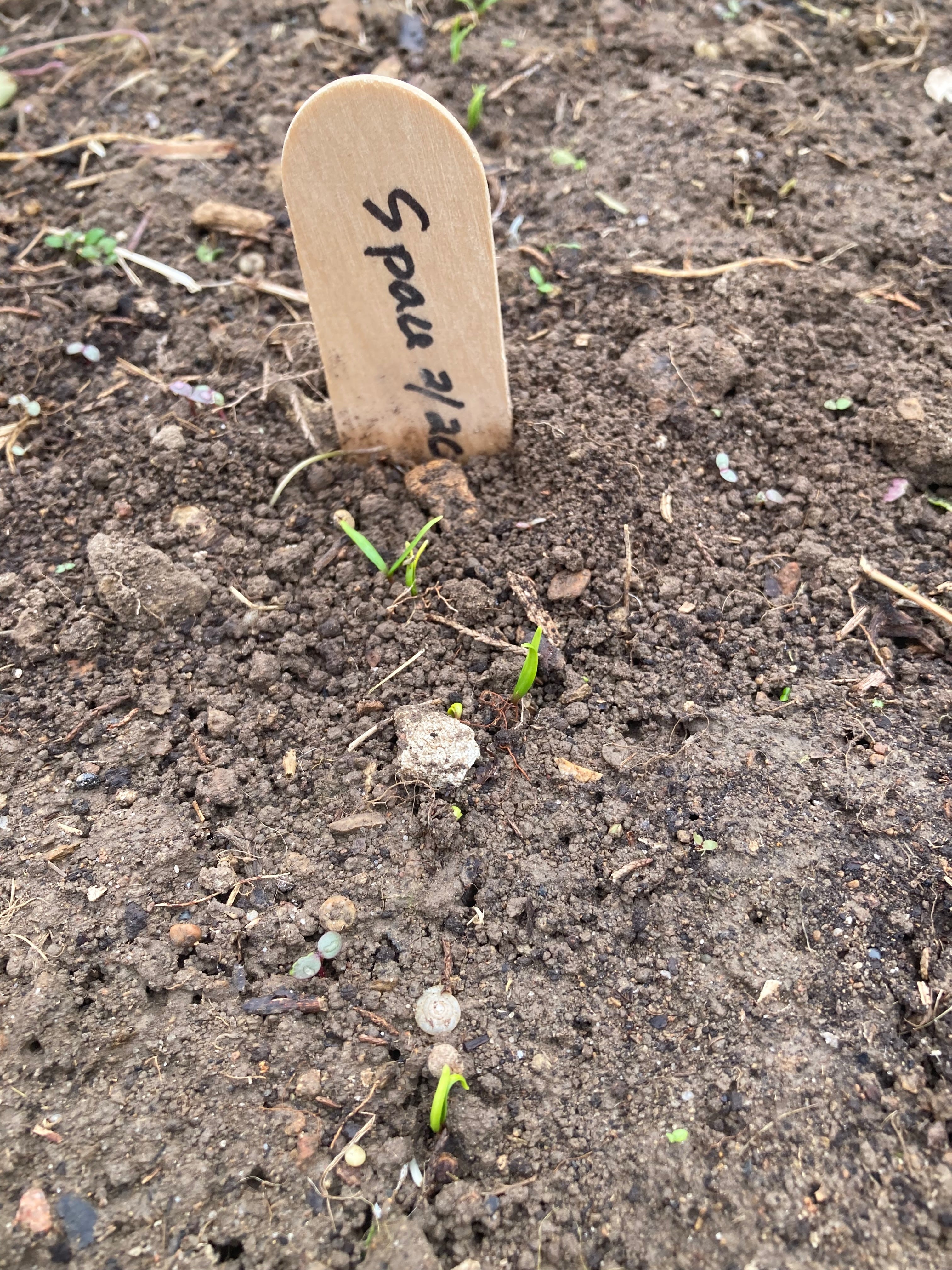
On February 20 the soil temperature in my garden reached sixty degrees and it was no longer possible to resist the temptation to plant seeds directly in the ground. So I just did it. A cold snap came last weekend, but the spinach seeds I planted were safe in the soil with an Agribon blanket draped loosely over the bed. This morning they were up!
The ground is still pretty wet and cold though. A neighbor who did a little tilling over the weekend stopped, because it was TOO wet. Tilling and/or plowing wet ground is not advisable for several reasons: the main reason is that walking and running machinery on wet soil can compact it pretty badly, especially if the soil has a lot of clay in it.
The bed that I planted with spinach was fluffy enough that it was ok to disturb it a little. I didn’t walk on it: I just weeded it by hand, with my feet in the path. One advantage of beds, raised or not, is that you can work on them when the soil would be too wet to walk on or till with a machine: you can simply pull weeds out by hand, make shallow drills and plant seeds without doing any damage. Sure, you compact the paths, but they are already compacted.
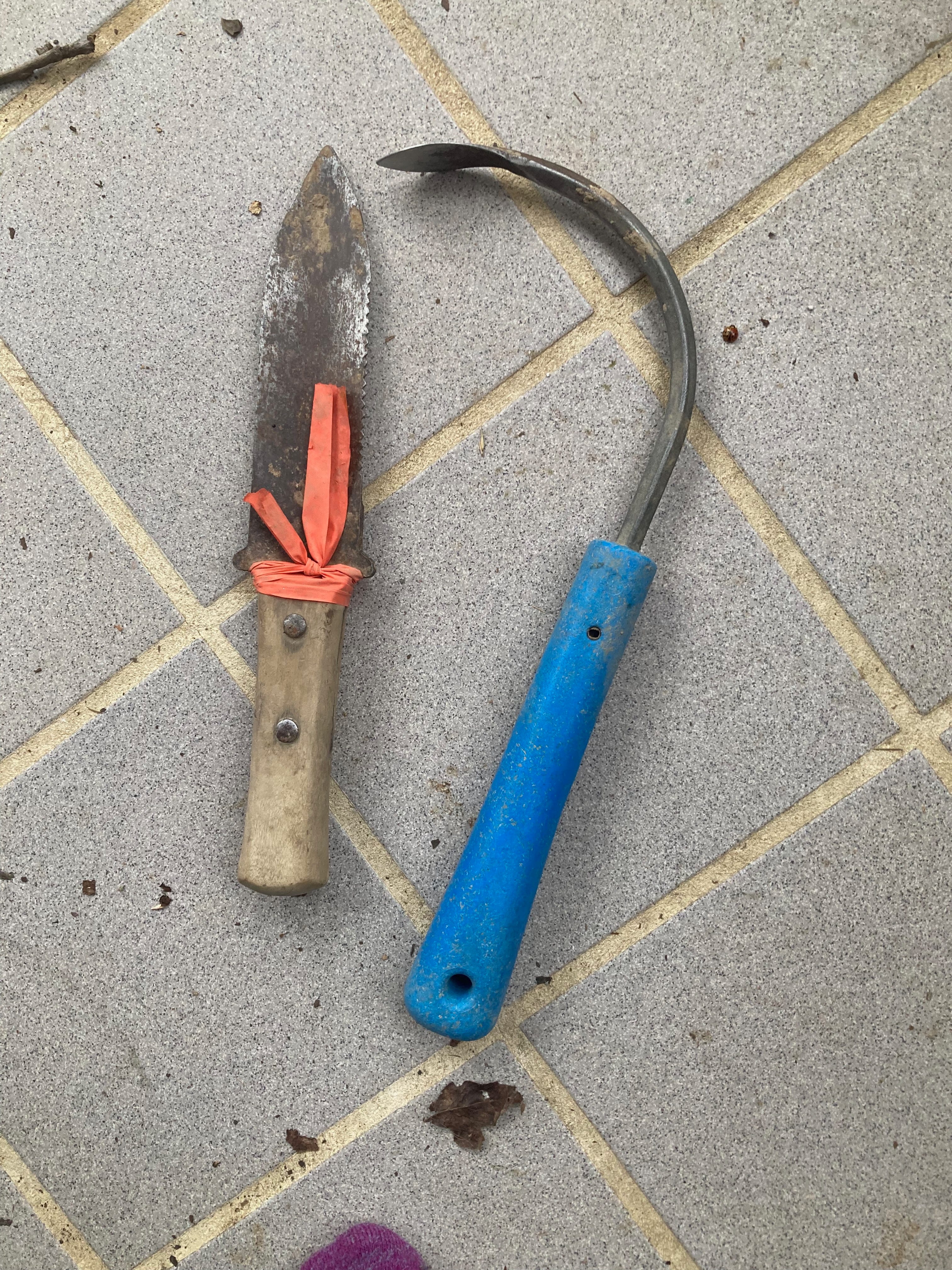
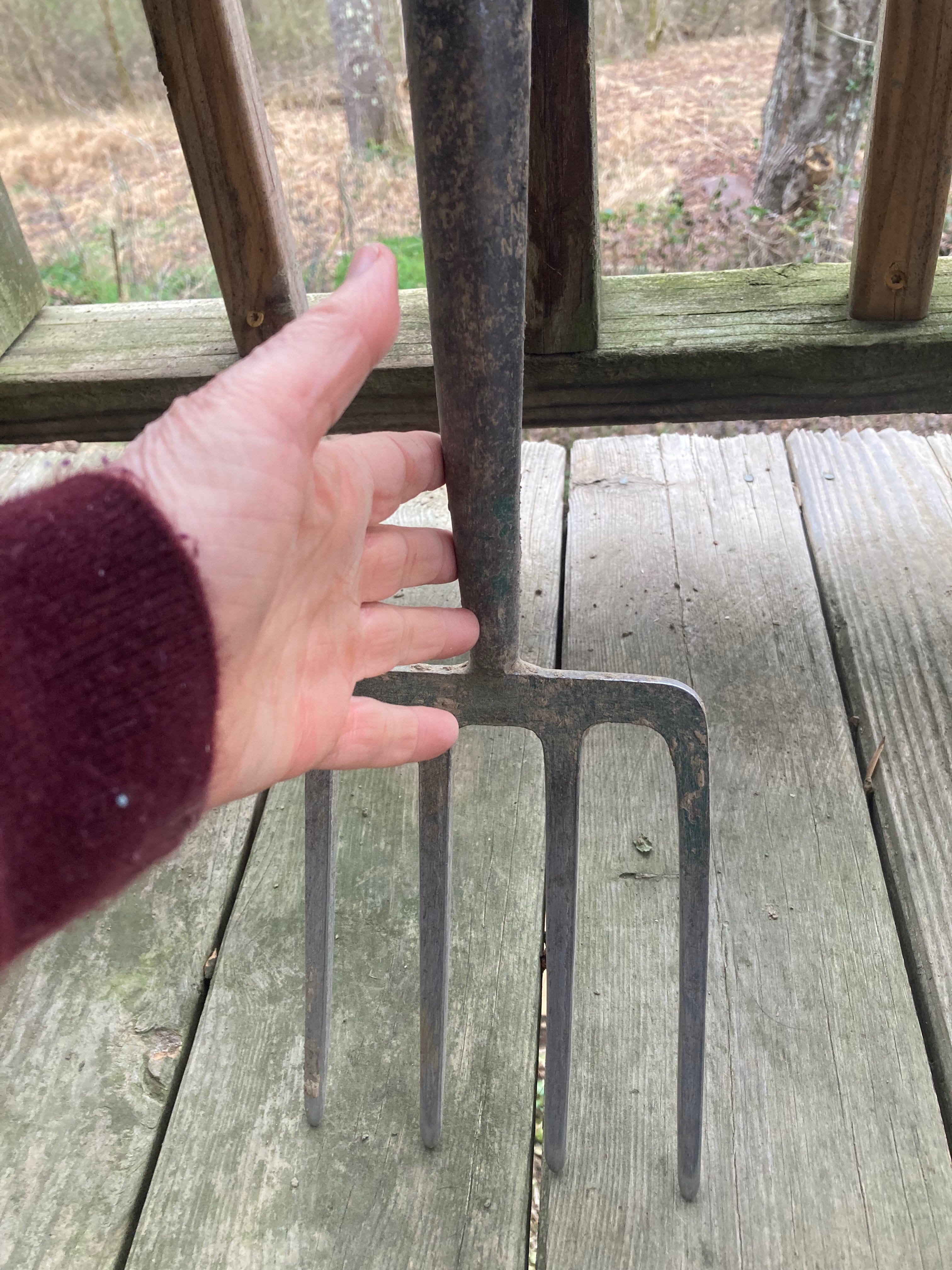
When I say “by hand,” I mean using hand tools. I have a few hand tools that are useful for pulling out weeds without doing a lot of extensive digging or tilling. One is the Cobrahead weeder; another is the Horihori weeding knife. I also have a small digging fork that I got forty years ago for my son, because he wanted to dig up carrots, but I use it all the time now. Mine came from Smith and Hawken (no longer in business), but you can get a good one here. It’s very useful for standing in the paths and just turning over the top four inches or so of soil and weeds.
How can you tell if the soil is too wet to walk on or till? You can dig up a handful of it and try to shape it into a ball. If you can shape it into a ball and then crumble it apart with your fingers, it’s perfect. You can also drop it and see if it breaks up. If it doesn’t break, and it stays stuck together, it’s still too wet. Obviously, sandy and loamy soil will dry out more quickly than soils with a lot of clay. Adding organic matter over the years will make your soil lighter and therefore make it dry out a little quicker in spring. Creating those so-called raised beds helps too: they drain and warm up more quickly in spring. (But they also dry out very fast in hot weather and have to be watered more.) Watch Orin Martin here as he discusses soil that is too wet (or too dry) to work. (This UC Santa Cruz channel has a lot of helpful videos!)
My compromise is to make terraces instead of raised beds: the downhill sides of the beds on my sloping garden sometimes have a board holding the dirt up, but not always. About half of them have one of these boards. The best boards come from the Grant Cedar Mill near Gordonsville. These boards are not permanently nailed or screwed to anything: I just drive grade stakes into the ground next to them, on the downhill side, to hold them up. They’re easy to move and re-arrange that way. Honestly, since the slope is gentle, the downhill side of a bed, while it might be raised six inches or so above the level of the path, often just stays up by itself and doesn’t really need support. You can use a rake to sort of shape it so that it doesn’t collapse.
The earliest vegetables that I sow directly in the ground are spinach, sometimes kale, radishes, and peas. I also need to get a spot ready for all those onion seedlings on the deck: the sooner they can go into the garden, the better. When spring is rainy, as it often is, I sometimes put a tarp down on a bed that I want to dry out. I let the bed dry out on the warm days with no tarp; then I put the tarp down on it if rain threatens, so that the soil will stay dry underneath. That way I won’t have to wait for it to dry out again.
After I get these onions transplanted, the next priority will be to get a place ready for potatoes and peas. Sometimes I start a few peas inside in plastic six-packs, to keep mice from eating the direct-sown seeds in the garden. But last spring I had good success just treating the pea seeds with Cole’s Flaming Squirrel Seed Sauce before direct-seeding: this kept the mice from eating them underground. To be honest I treated the spinach seeds too, with this sauce. Voles and mice are very hungry this time of year and will pretty much eat anything. (They don’t seem to bother transplants though, seedlings that are already up and growing. Eating seedlings and transplants is a job for groundhogs and rabbits. More on that in a later post.)
In the past I tried planting spinach in fall and overwintering it under row cover, but sometimes it bolted pretty early in the spring. So now I just start it in spring. I planted ‘Space’ last week, but I have some other varieties too: ‘Flamingo’ and ‘Lizard’ are good, and I have a new one called ‘Red Tabby’ that has purplish stems, in keeping with my purple vegetables theme for 2026. There’s nothing wrong with the ordinary kinds at the farm supply store like ‘Bloomsdale,’ either. I grew that one for years.
Southern Exposure has a useful pdf to download, about when you can plant different vegetables outside if you live in the Southeast in zone 7a. This guide has worked pretty well for me for years. It assumes a last frost date of April 15 and a first frost date of Oct 15. Close enough.
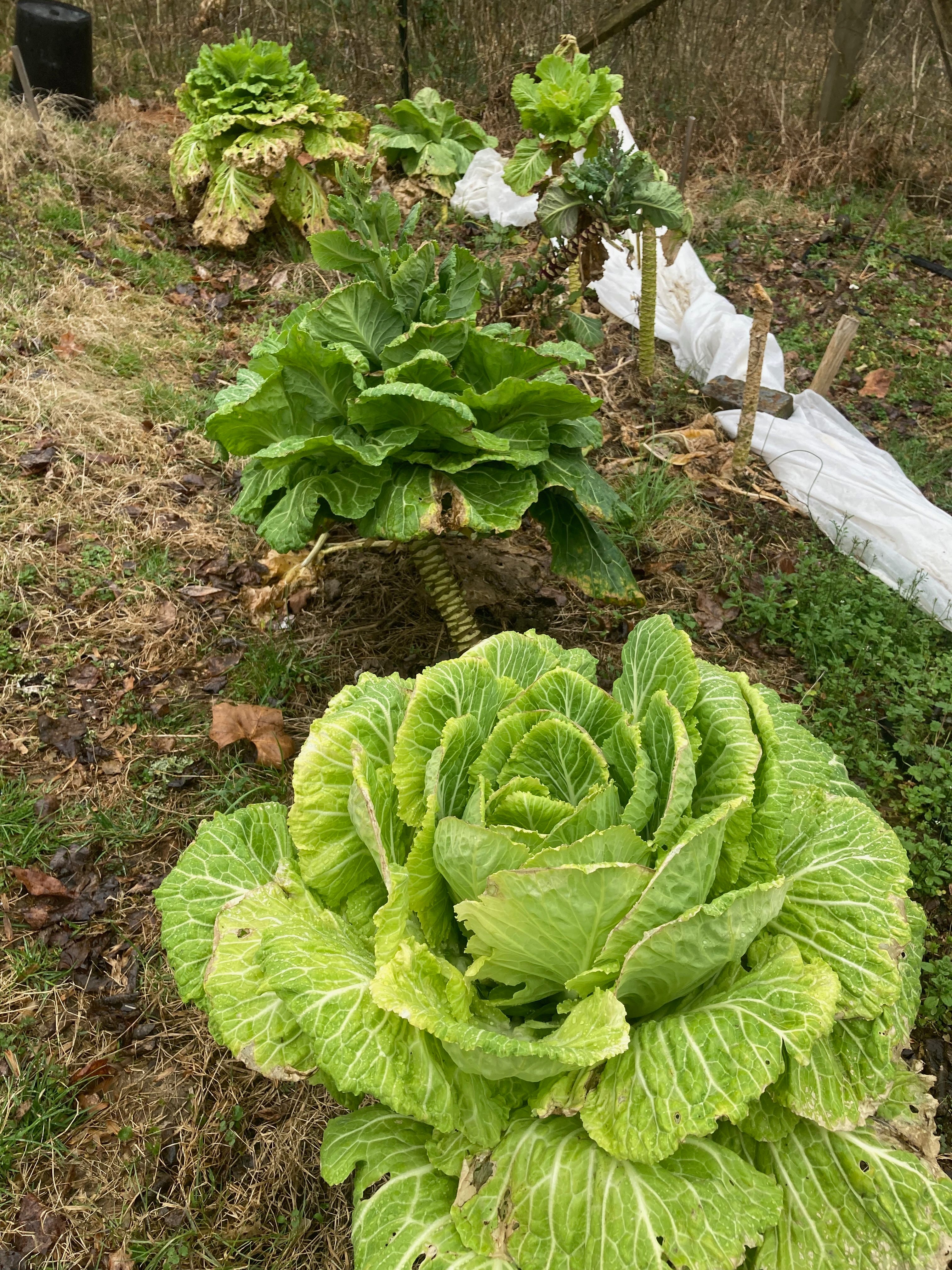
There is still plenty to eat in my garden right now. The collard plants that I sowed inside a year ago, in 2025, are twelve months old and still alive in the garden, tall and proud, having survived single digit temperatures. They were covered with Agribon over the winter; it was just draped over them with no hoops. They are starting to form flower buds and will soon burst into bloom and set seeds. It was fun to take the Agribon off and see how they were doing. They looked happy to get more light on their leaves finally. I am always amazed at the way in which collards keep making food all year round. There is never a time when you can’t pick some collards! The plant in the foreground is a yellow cabbage collard plant. These seem particularly hardy, but the Alabama purple ones also did well. I sometimes use some scissors to trim off any brown parts on the leaves before I cook them.
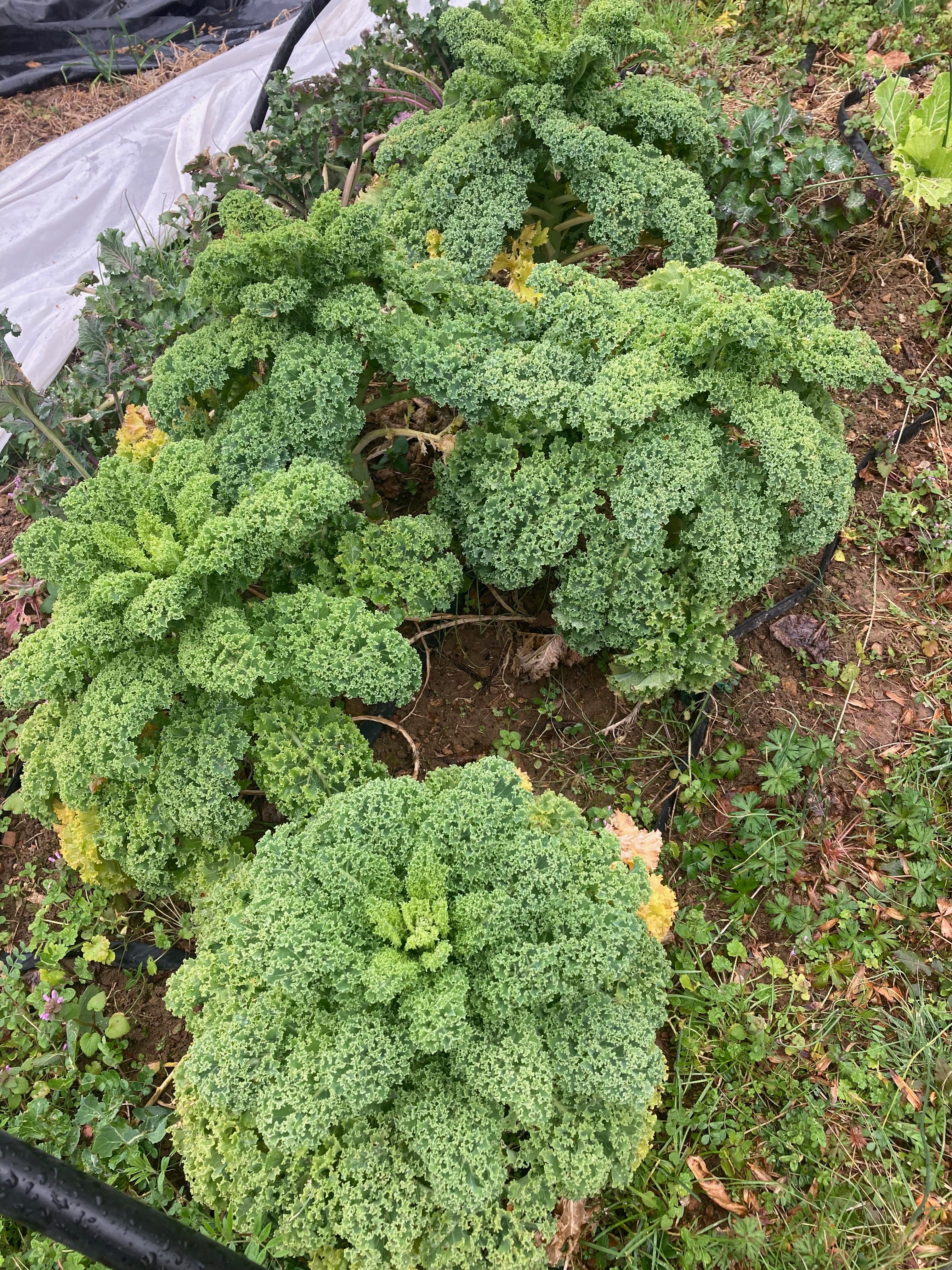
The kale was under a hoop-and-Agribon tunnel: those plants look great and are delicious. Some bunching onions are ready to eat, and the leaf celery survived the winter. I even found some beets that I forgot to harvest last fall. Inside, I still have a lot of winter squash and sweet potatoes to eat. (All the Solonaceae potatoes are gone; I ate those first.) Greens plus sweet potatoes and squash plus some hamburger and eggs: all that is enough.